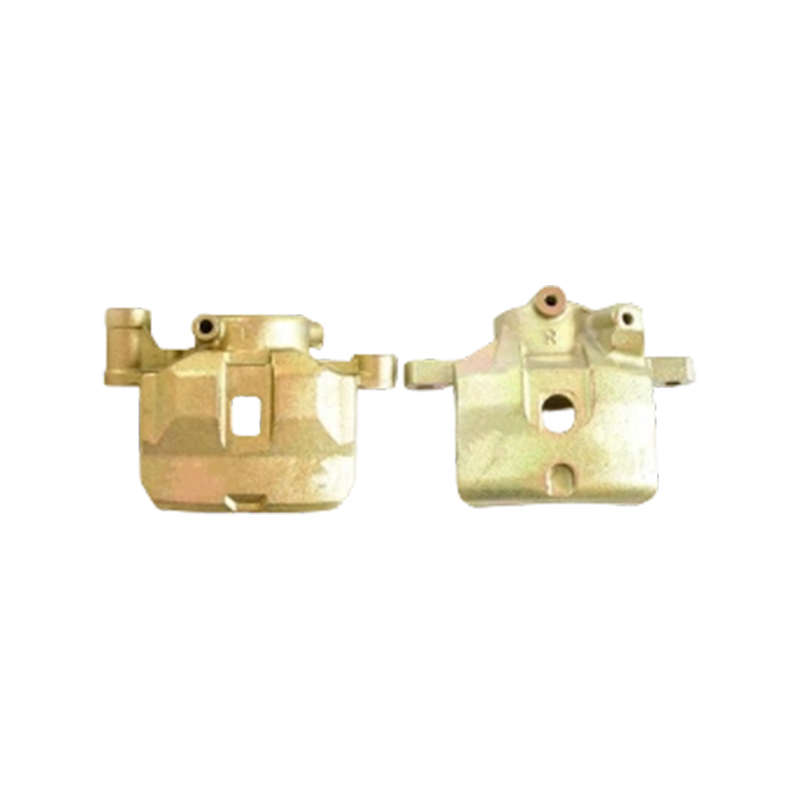
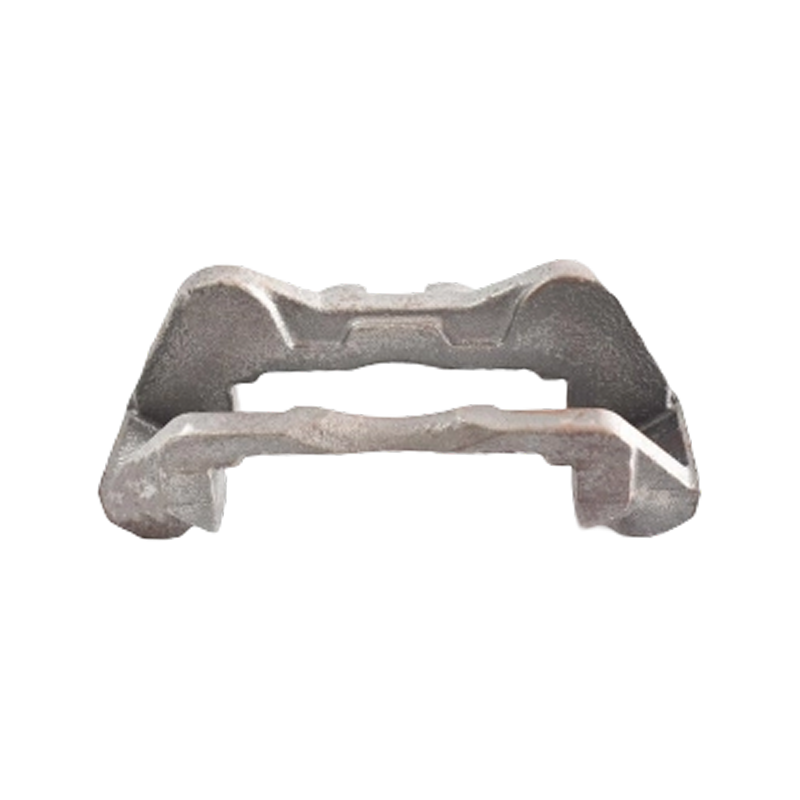
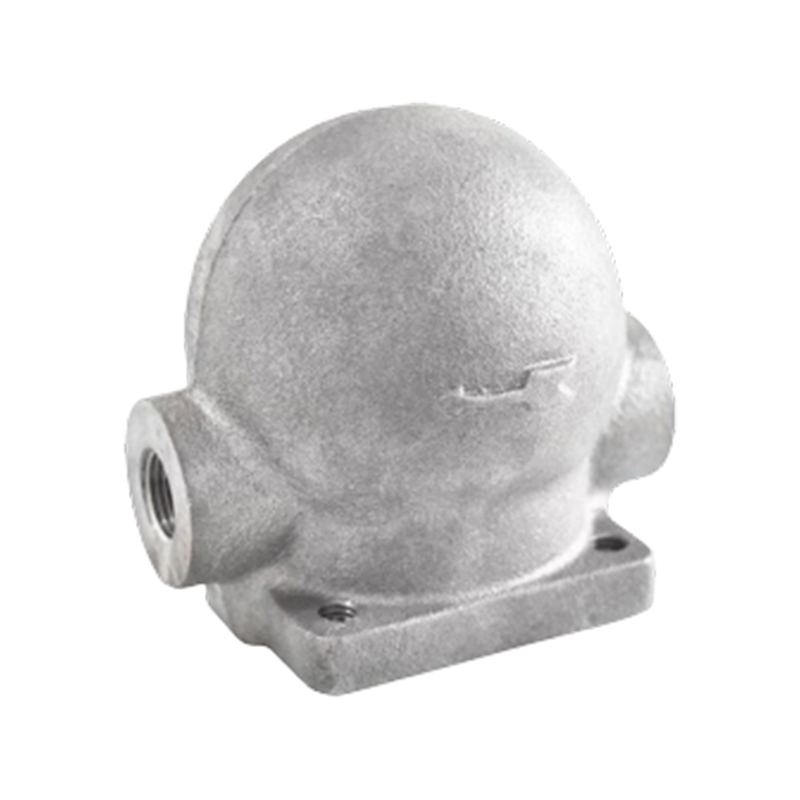
A2F Axial Piston Hydraulic Pump Housing Assembly - Green Sand Casting - Ductile Iron Castings Industry knowledge
Mastering Hydraulic Performance: The Ultimate Guide to A2F Axial Piston Hydraulic Pump Housing Assembly - Ductile Iron Castings
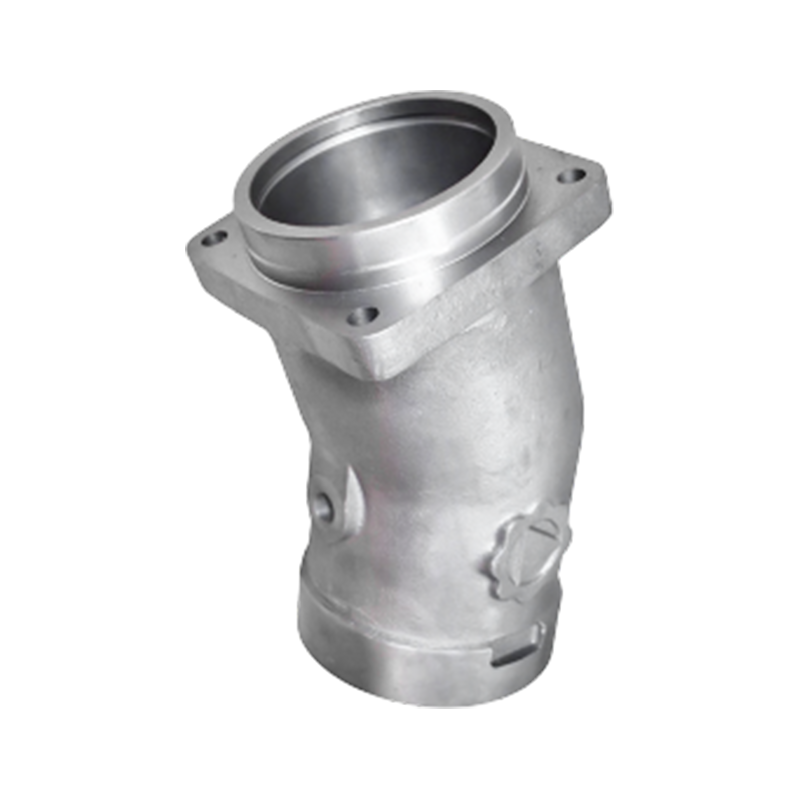
In high-pressure hydraulic systems, the pump housing is not just an enclosure—it is a critical structural component that directly influences alignment, thermal management, and vibration damping. For engineers and procurement specialists seeking durability under continuous heavy loads, the A2F Axial Piston Hydraulic Pump Housing Assembly - Ductile Iron Castings represents a superior choice over conventional gray iron or aluminum alternatives. This guide delivers technical depth and practical selection insights.
Why Material Science Defines Pump Housing Reliability
The housing of an axial piston pump must withstand internal pressures exceeding 400 bar while maintaining geometric stability. Ductile iron (nodular cast iron) provides exceptional yield strength and elongation, making it ideal for the A2F series housing assembly. Unlike gray iron, which fractures abruptly under shock loads, ductile iron absorbs energy and resists crack propagation.
- Superior mechanical properties: Tensile strength typically 450-600 MPa, with 5-18% elongation.
- Fatigue resistance: Withstands pulsating hydraulic pressures without micro-cracking.
- Machinability & seal retention: Provides smooth mating surfaces for O-rings and gaskets.
- Cost-effectiveness: Lower total lifecycle cost compared to forged steel or complex alloys.
Green Sand Casting vs. Resin Sand Molding for A2F Housings
Two primary foundry processes dominate the production of A2F Axial Piston Hydraulic Pump Housing Assembly - Ductile Iron Castings: green sand and resin sand. Each method offers distinct advantages depending on volume, tolerance, and surface finish requirements. Understanding these differences helps OEM buyers specify the right process for their pump durability targets.
| Characteristic |
Green Sand Casting |
Resin Sand Molding |
| Surface finish (Ra) |
6.3–12.5 µm |
3.2–6.3 µm |
| Dimensional tolerance |
CT9–CT11 |
CT7–CT9 |
| Annual volume suitability |
High volume (20k+ units) |
Low to medium volume (100–10k units) |
| Core complexity |
Moderate |
High (fine oil passages) |
| Relative tooling cost |
Low |
Medium-High |
For most standard A2F pump applications, green sand casting offers the best balance of economy and performance. However, when intricate internal oil galleries or tighter mounting tolerances are specified, resin sand becomes the preferred method.
Key Design Features of a Robust Pump Housing Assembly
A properly engineered A2F Axial Piston Hydraulic Pump Housing Assembly - Ductile Iron Castings integrates several functional zones: bearing supports, port faces, drain passages, and mounting feet. Any deviation in casting soundness leads to premature bearing failure or external leakage. Below are the non-negotiable quality markers.
- Uniform wall thickness distribution: Prevents thermal hot spots during solidification and reduces residual stress.
- Controlled nodularity (≥80%): Ensures consistent impact strength and machined edge integrity.
- Integral oil channels: Sand cores must be precisely placed to avoid thin webs or burn-in defects.
- Post-casting cleaning: Shot blasting and pressure testing verify freedom from micro-porosity.
Quality Assurance Protocols for High-Cycle Hydraulic Applications
Industrial hydraulic pumps often run 24/7 in construction, mining, or agricultural equipment. To guarantee a housing assembly meets these demands, manufacturers implement rigorous inspection stages. When sourcing A2F Axial Piston Hydraulic Pump Housing Assembly - Ductile Iron Castings, always verify the following QA checkpoints.
- Spectrometer analysis: Confirms ductile iron grade (e.g., 450-10, 500-7, 600-3).
- Non-destructive testing (NDT): Magnetic particle inspection for surface cracks; ultrasonic for internal voids.
- Hydrostatic leak testing: Each housing must hold 1.5x maximum operating pressure without seepage.
- Dimensional layout report: Verifies mounting flange parallelism, bore concentricity, and thread positions.
Common Failure Modes & How Proper Casting Prevents Them
Even a well-designed pump will fail prematurely if the housing distorts or leaks. Understanding failure mechanisms helps procurement teams avoid low-quality alternatives. The table below maps typical hydraulic pump housing failures to casting-specific root causes.
| Failure Mode |
Symptom |
Casting Root Cause |
Preventive Solution |
| Flange distortion |
Internal leakage, reduced efficiency |
Uneven residual stress from poor gating |
Stress-relief annealing after casting |
| Thread stripping |
Mounting bolts loosen |
Nodule count too low in localized area |
Optimized inoculation + spectro control |
| Oil seepage through wall |
External wet spot under pressure |
Micro-shrinkage or dross inclusion |
Pressure testing + X-ray inspection |
| Premature bearing wear |
Noise, vibration, high temperature |
Bore misalignment (out-of-round) |
CNC finishing on precision fixture |
Optimizing Supply Chain for A2F Housing Assemblies
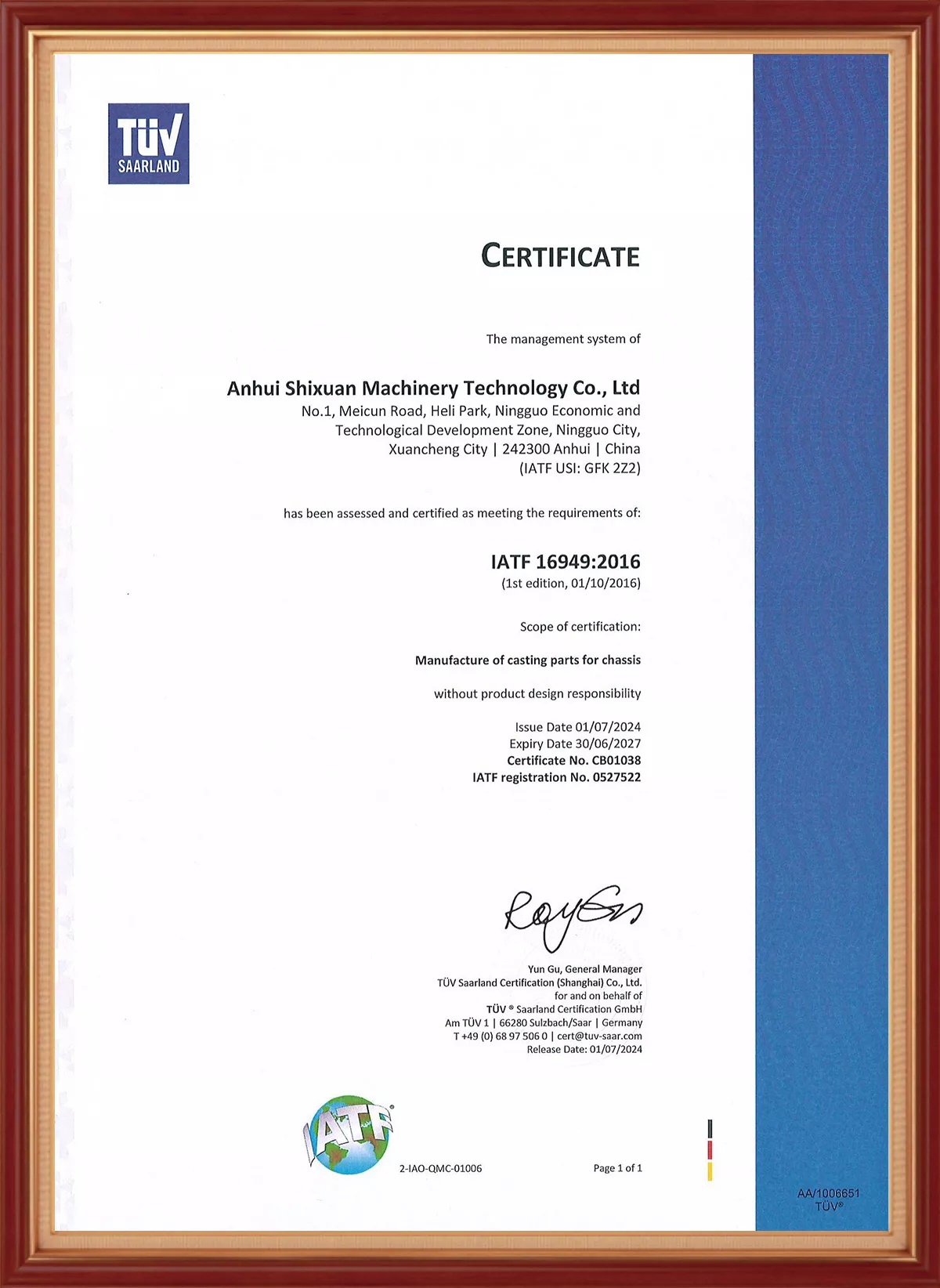
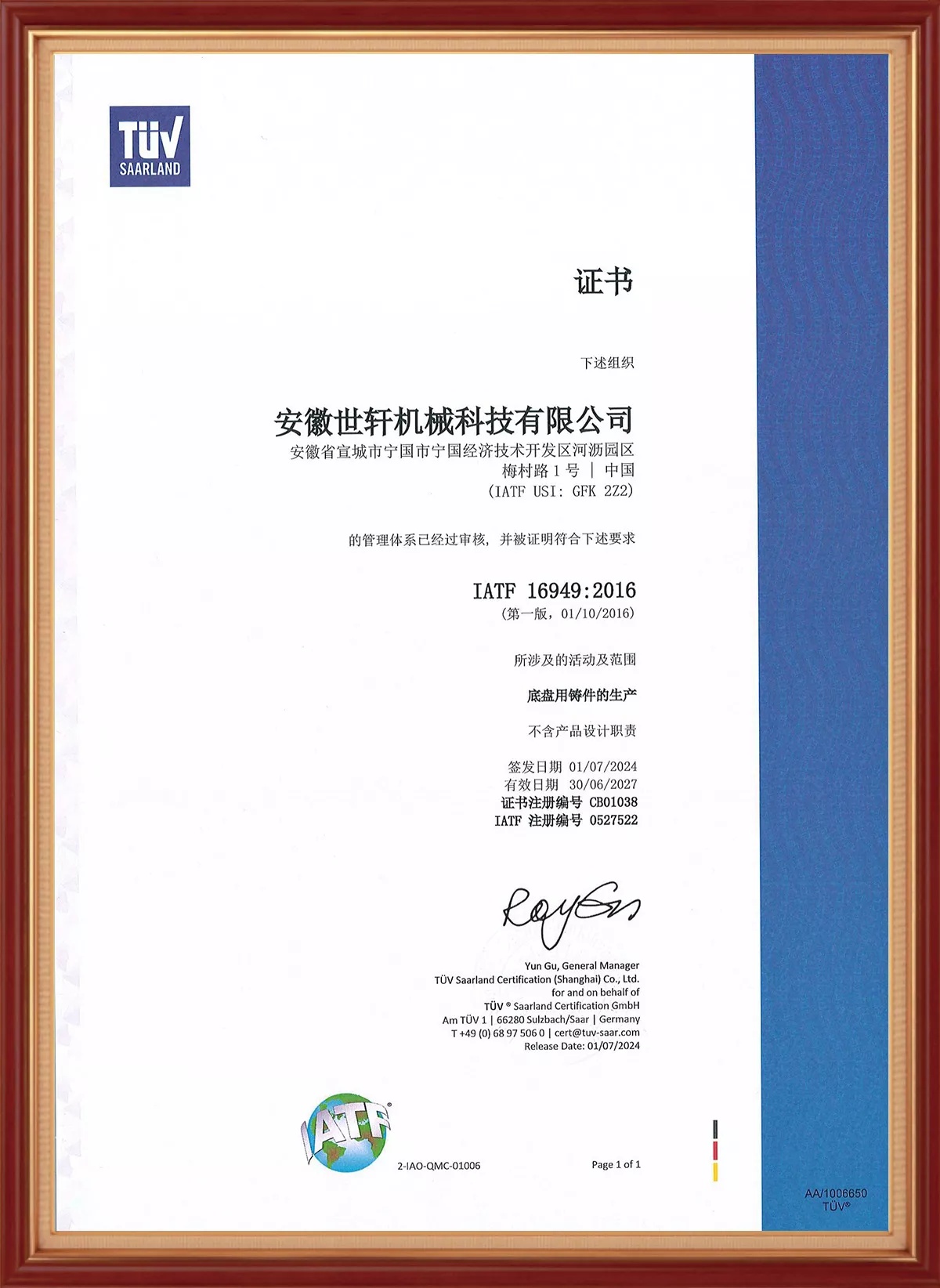
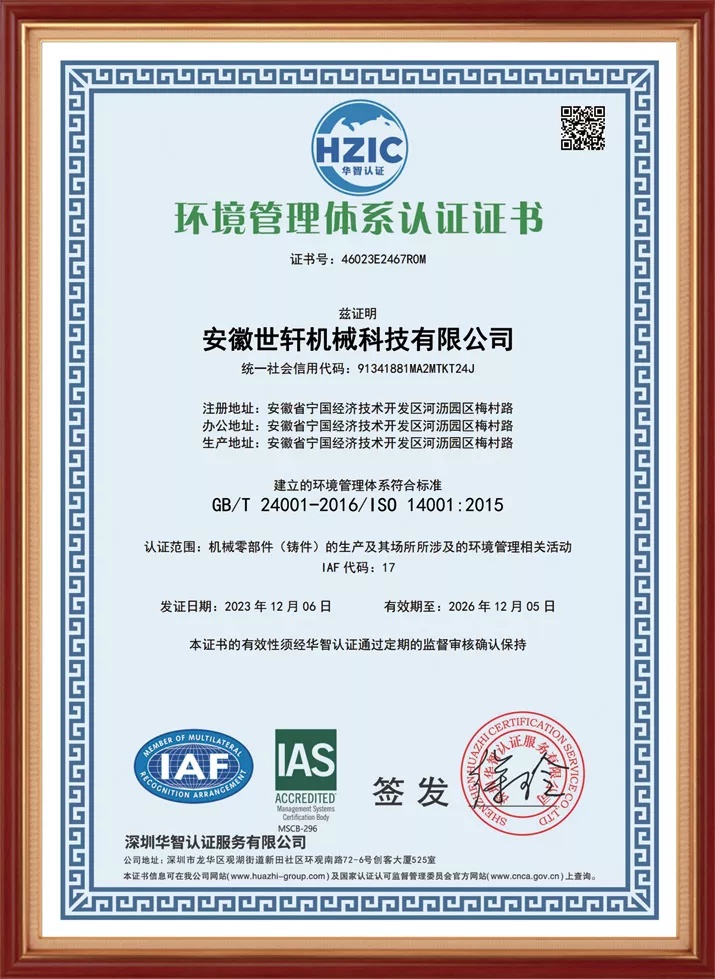
For OEMs and aftermarket distributors, consistent quality and on-time delivery matter as much as technical specs. Working with a specialized foundry that produces A2F Axial Piston Hydraulic Pump Housing Assembly - Ductile Iron Castings ensures both process stability and compliance with international standards. Look for certifications such as IATF 16949 (automotive-grade quality systems) and ISO 14001 (environmental management).
- In-house CNC finishing: Reduces tolerance stack-up from external machine shops.
- Traceability system: Each casting batch linked to material certificate and NDT records.
- Packaging for export: Anti-rust coating and shock-resistant crates prevent transit damage.
FAQ
What is the difference between A2F and A2V pump housings?
The A2F Axial Piston Hydraulic Pump Housing Assembly - Ductile Iron Castings is specifically designed for fixed-displacement, open-circuit applications with high self-priming speed. In contrast, A2V housings are for variable displacement closed-circuit systems. The A2F housing typically features simpler port geometry but requires thicker walls near the shaft bearing due to constant high-speed rotation. Always confirm your pump series before ordering housing replacements.
Can ductile iron pump housings be welded for repair?
Welding ductile iron is strongly discouraged for high-pressure hydraulic housings. The heat-affected zone converts nodular graphite into martensite and flake graphite, causing brittleness and crack initiation. Instead, source a new A2F Axial Piston Hydraulic Pump Housing Assembly - Ductile Iron Castings from a certified foundry. If temporary repair is unavoidable, use nickel-based electrodes, preheat to 350°C, and post-weld stress-relief—but note that warranty and pressure rating will be void.
How do I identify casting porosity inside a pump housing?
Internal porosity is invisible to the naked eye. Use these methods: (1) Hydrostatic testing—pressurize the housing with water or oil and watch for pressure drop; (2) Radiography (X-ray)—reveals subsurface voids; (3) Dye penetrant on machined surfaces—only detects open porosity. Reputable suppliers of A2F Axial Piston Hydraulic Pump Housing Assembly - Ductile Iron Castings perform 100% leak testing on critical oil passages before shipping.
What is the typical lead time for custom A2F housing castings?
For a new sand-casting tool (pattern), lead time ranges 30–45 days including sampling. Production runs of 500–2000 units typically ship 15–25 days after sample approval. If you require A2F Axial Piston Hydraulic Pump Housing Assembly - Ductile Iron Castings with resin sand cores for complex oil passages, add 10 days for core box fabrication. Always request a sample lot for dimensional approval before full production.
Why does my pump housing crack near the mounting foot?
Repeated cracking at the mounting foot usually indicates either (1) misaligned pump installation causing bending stress, or (2) insufficient nodularity in that casting section. Ductile iron must maintain minimum 80% nodularity per ASTM A536. Request a metallurgical report from your casting supplier. Also verify that mounting bolts are torqued evenly—uneven clamping loads concentrate stress. A properly made A2F Axial Piston Hydraulic Pump Housing Assembly - Ductile Iron Castings with consistent nodularity will resist this failure.




 English
 中文简体
中文简体 Español