 English
 中文简体
中文简体 Español
What Is an Inverted-Bucket Steam Trap in Green Sand Casting Production?
Home / News / Industry News / What Is an Inverted-Bucket Steam Trap in Green Sand Casting Production?


Content
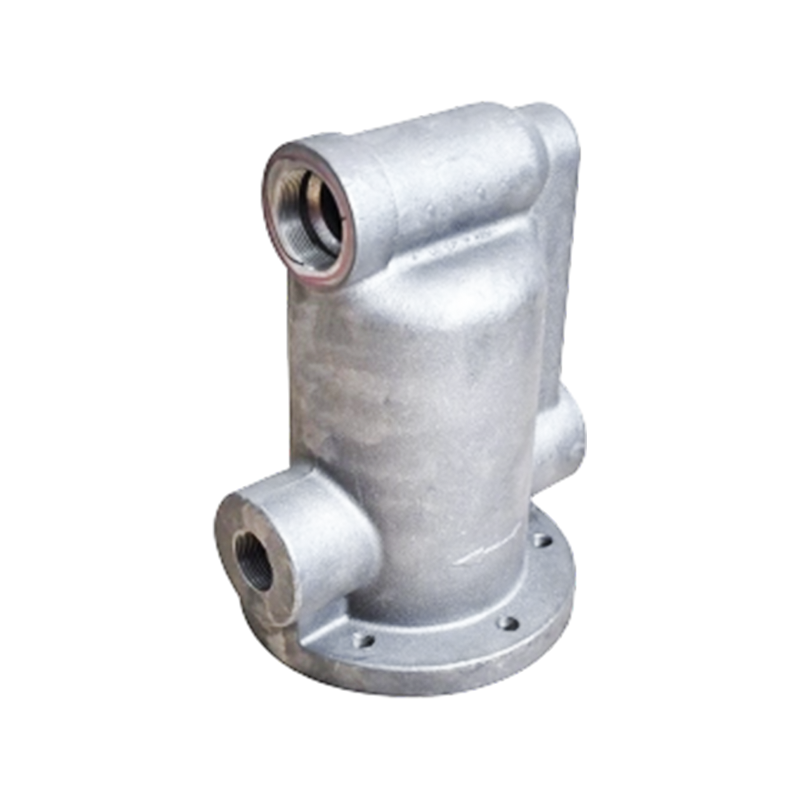
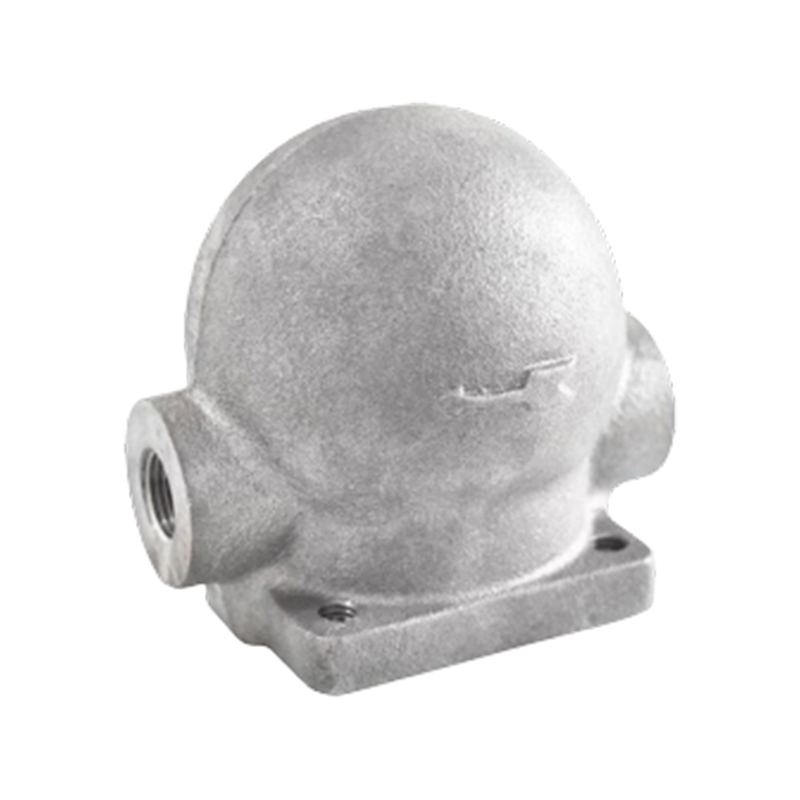
The manufacturing of robust steam traps begins long before machining. For B2B buyers and procurement engineers, understanding the metallurgical foundation is critical. An Inverted-Bucket Steam Trap - Green Sand Casting represents a specific intersection of thermodynamic efficiency and high-volume foundry capability. This article provides a deep technical examination of how the green sand process influences the integrity and lifespan of ASTM A126 Class B or ASTM A48 castings used in inverted bucket mechanisms. We avoid retail specifics and focus strictly on the foundry engineering and material science that governs pressure retention and wear resistance.
Green sand casting is not a singular material but a system of silica sand, bentonite clay, water, and carbonaceous additives. For inverted-bucket steam traps, which operate under cyclic thermal stress and continuous water hammer, the casting must exhibit dense grain structure and dimensional consistency. Engineers at ISO-certified foundries specify green sand over shell molding for these components due to the cost-efficiency at weights ranging from 2 kg to 25 kg per body. The moisture in green sand provides a cushioning effect during metal pouring, reducing hot tearing in the complex internal chamber that houses the bucket linkage. However, the process requires strict control of sand permeability and active clay content to prevent gas defects near the valve seat area.
In assessing supplier capabilities, technical buyers frequently search for specific combinations of process and performance. The following five long-tail phrases represent high-intent queries used by maintenance engineers and OEM purchasing departments. These terms are embedded within the technical context of this analysis.
The performance of an Inverted-Bucket Steam Trap - Green Sand Casting hinges on the melt chemistry and cooling curve. The foundry environment dictates the final tensile strength and leak path resistance. Procurement specifications must address the following engineering realities.
Most standard inverted bucket traps utilize gray iron due to its superior damping capacity and thermal conductivity. However, for high-pressure differentials exceeding 20 bar, ductile iron provides necessary elongation to resist fracture from water hammer. In a green sand mold, ductile iron exhibits a greater tendency for shrinkage porosity. Foundries mitigate this by utilizing rigid flasks and precisely calculated riser placement. The inverted bucket steam trap cast iron material specifications should always reference the minimum tensile strength (e.g., 31,000 psi for Class 40) and hardness (typically 180-240 HBW).
The internal geometry of the trap contains the inverted bucket and linkage pivot points. Green sand cores, usually produced via the shell process, define this intricate cavity. An unstable core will result in a shift of the seat face relative to the bucket guide. Engineers scrutinize the durability of green sand cast steam trap bodies by examining the as-cast surface finish in the float chamber. While green sand leaves a rougher surface finish (250-400 RMS) than investment casting, this texture is actually beneficial. The micro-roughness promotes the formation of a stable magnetite layer in steam service, inhibiting corrosion under wet conditions.
The lifecycle of a mold defines the cost per part. The green sand casting process for pressure retaining parts demands high-pressure molding lines (typically 10-14 kg/cm² squeeze pressure) to ensure mold hardness near the parting line. This section outlines the critical control points that separate commercial quality from industrial grade.
In an Inverted-Bucket Steam Trap - Green Sand Casting line, the placement of the core defines the wall thickness around the seat. A deviation of ±0.5 mm can alter the trap's capacity rating. ISO 8062 CT8-CT10 is the expected tolerance range for green sand, though critical sealing faces are always machined. The casting must provide a consistent "machining envelope." A common defect in substandard castings is a hard spot caused by rapid chilling against the pattern plate. This causes premature tool wear during CNC threading of the inlet/outlet connections.
Procurement teams often weigh the trade-offs between green sand and alternative methods. The following comparison is based on a standard 1" NPT trap body weighing 4.5 kg. The data reflects typical industrial foundry outputs without referencing specific brand names.
| Process Parameter | Green Sand Casting | Investment Casting (Lost Wax) | Shell Mold Casting |
|---|---|---|---|
| Surface Finish (RMS) | 250 - 400 | 80 - 125 | 120 - 200 |
| Typical Tolerance (ISO 8062) | CT9 - CT10 | CT4 - CT6 | CT6 - CT8 |
| Tooling Cost Index | Medium (Pattern Plate) | Very High (Wax Die) | High (Metal Pattern) |
| Minimum Wall Thickness | 4.0 mm (Feasible) | 1.5 mm (Feasible) | 2.5 mm (Feasible) |
| Economic Batch Size | 500+ Units/Year | 50-500 Units/Year | 200-2,000 Units/Year |
This table clarifies why green sand versus investment casting for steam valves is a decision driven by volume and pressure class. For commodity traps, green sand is the unequivocal standard. For ultra-high purity or supercritical steam, investment casting may be specified despite the premium.
Any B2B contract should explicitly name the governing standard. The ASTM A126 Class B inverted bucket trap casting designation is common for gray iron pressure-retaining parts. Class B offers a minimum tensile strength of 31 ksi, whereas Class C pushes to 41 ksi. Foundries producing to this standard must conduct routine melt checks and pour test bars from a separately cast block or an integrally cast coupon. Buyers should verify that the supplier's green sand system maintains a moisture content between 2.8% and 3.5%. Excess moisture leads to hydrogen pinholing, a subtle defect invisible to the naked eye but fatal under hydrostatic test pressure.
The Inverted-Bucket Steam Trap - Green Sand Casting methodology remains a cornerstone of industrial fluid control due to its unmatched economy of scale. While the process appears ancient, modern high-pressure molding and rigorous metallurgical control elevate the humble sand casting to an engineering discipline. For wholesale buyers, the key lies not in the aesthetics of the raw casting but in the density of the iron matrix and the precision of the core placement. When specifying for steam systems, the conversation must move beyond "cast iron" and toward defined material grades, process tolerances, and proven repeatability in the foundry.
Green sand casting is preferred primarily for material compatibility and internal complexity. Inverted bucket traps require internal chambers with undercuts (the bucket linkage area) that cannot be extracted from a permanent metal die without destroying the core or using expensive slides. Furthermore, cast iron (gray or ductile) is the industry standard for steam due to its resistance to graphitic corrosion. Cast iron cannot be die cast because it would attack the steel tooling and solidify too rapidly. Green sand provides a disposable mold that accurately replicates the complex internal core at a fraction of the tooling cost for equivalent pressure die-casting equipment.
Engineers should inspect for three primary defect categories. First, sand inclusions on the internal bucket guide surface, which cause mechanical binding of the linkage. Second, shrinkage porosity near the boss where the seat is machined; this is often revealed only after machining and leads to weepage during hydrostatic testing. Third, "hard spots" or chilled edges on the flange faces caused by excessive moisture or carbon loss at the mold-metal interface. These hard spots drastically reduce tool life during CNC machining. A proper foundry will use radiography or at minimum a pressure test cycle on every single unit to mitigate these risks.
Yes, provided the foundry adheres to correct gating design and inoculation practices. Pressure tightness in cast iron is not a function of the mold medium but of the metal chemistry and feeding. In green sand, the mold wall movement can be an issue, but this is managed by using tight flask tolerances and high-pressure molding machines. For ASTM A126 Class B components, a foundry must demonstrate a "pressure tightness" rating through microstructure control—specifically, a distribution of Type A graphite flakes. Impregnation with anaerobic sealant is a standard secondary process to guarantee zero leakage for critical green sand casting process for pressure retaining parts.
The durability of the mechanism is largely a function of the internal casting skin. Green sand molds contain carbonaceous additives (seacoal). During pouring, these create a reducing atmosphere that results in a thin layer of graphite-rich iron at the surface. This layer is beneficial in steam condensate because it reduces the wetting of the surface, thereby slowing down erosion-corrosion. In contrast, a chemically bonded sand mold (no seacoal) might produce a cleaner but more chemically active surface. Therefore, the durability of green sand cast steam trap bodies in the presence of wet steam and carbonic acid is often superior to other casting methods due to this inherent surface conditioning.
Request for a call today