
Content
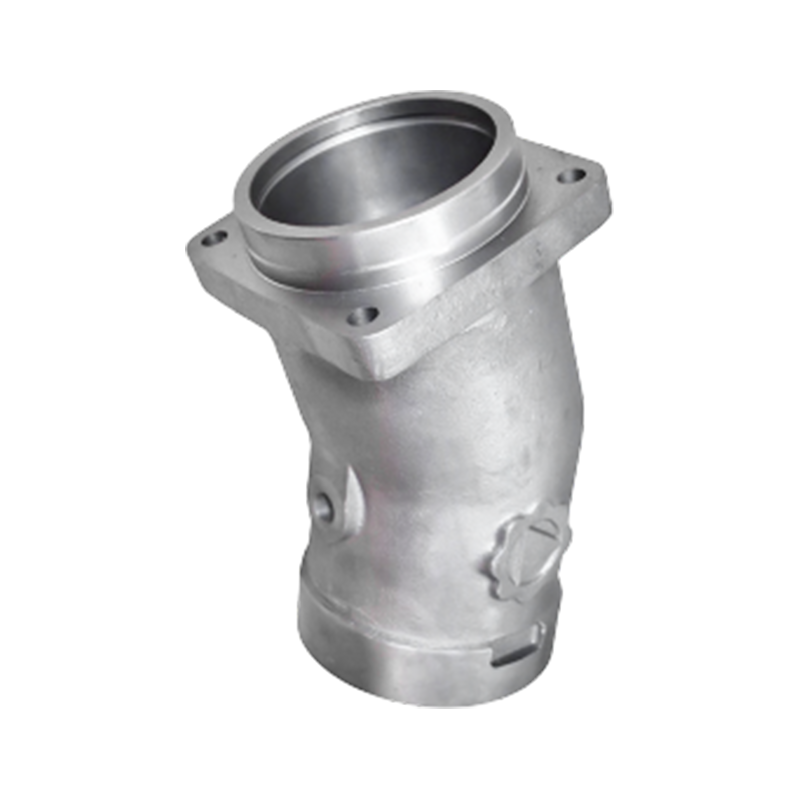
Ductile iron castings are ferrous components produced by adding a nodulizing agent—typically magnesium or cerium—to molten iron. This treatment forces the carbon content to precipitate as spheroidal (nodular) graphite particles rather than the sharp, flaky graphite found in gray iron.
Their widespread adoption stems from a single fact: they bridge the gap between cast iron and steel. They offer the excellent castability, machinability, and damping capacity of cast iron, while simultaneously delivering the strength, toughness, and ductility of low-carbon steel. This unique combination makes them the most cost-effective material choice for components that must withstand dynamic loads, impact, and wear over decades of service.
The metallurgical structure of ductile iron is what differentiates it from all other cast materials. In the as-cast state, the matrix can be entirely ferritic, entirely pearlitic, or a combination of both. The nodular graphite shape eliminates the stress-riser effect that causes gray iron to fracture abruptly.
This spherical morphology provides three critical engineering advantages:
Through matrix manipulation via alloying and heat treatment, foundries can tailor the microstructure to achieve specific property targets. For instance, a fully ferritic matrix yields maximum ductility and impact resistance, while a pearlitic matrix delivers higher tensile strength and wear resistance.
The mechanical property range of ductile iron is exceptionally broad, making it suitable for applications that demand either extreme strength or high ductility. The following data illustrate why engineers routinely select ductile iron over gray iron, malleable iron, and even cast steel.
| Property Metric | Gray Iron (Flake) | Ductile Iron (Nodular) | Cast Steel |
|---|---|---|---|
| Tensile Strength (MPa) | 150 – 400 | 400 – 900+ | 450 – 750 |
| Yield Strength (MPa) | Not Applicable | 250 – 620 | 250 – 550 |
| Elongation (%) | 0 – 0.5 | 2 – 22 | 15 – 25 |
| Impact Toughness (J) | 1 – 3 | 10 – 30 | 20 – 60 |
Notably, grades like 60-40-18 provide elongation up to 18% with tensile strength of 414 MPa, while 120-90-02 delivers tensile strength exceeding 827 MPa with 2% elongation for high-strength applications. This wide spectrum eliminates the need for multiple material families in complex assemblies.
The versatility of ductile iron is demonstrated by its presence in sectors ranging from municipal infrastructure to aerospace ground equipment. Approximately 70% of all ductile iron produced globally is consumed by three primary industries.
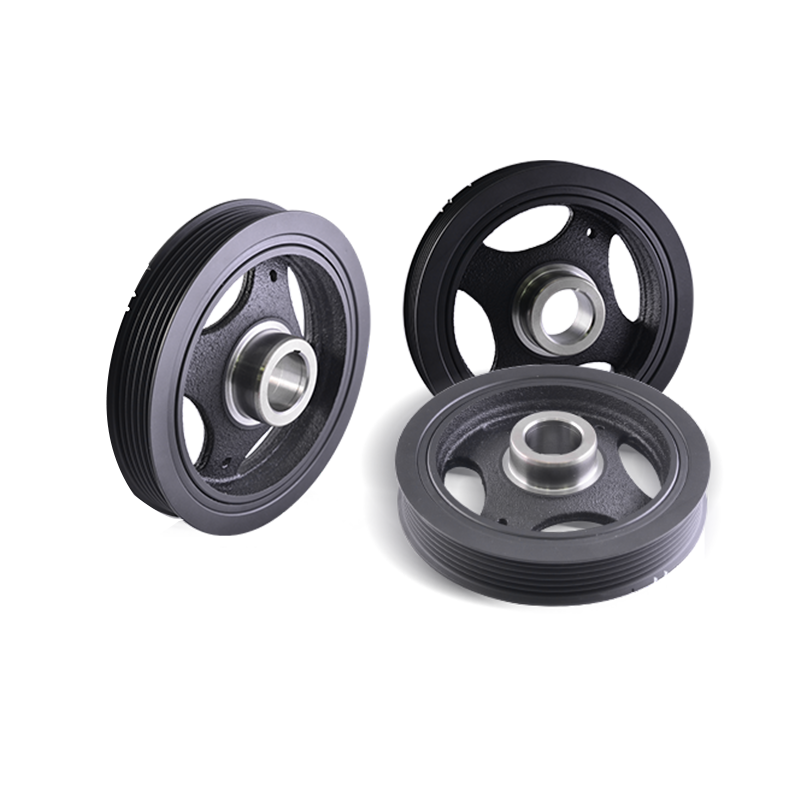
This sector utilizes ductile iron for safety-critical and high-cycle components. Typical parts include steering knuckles, suspension arms, axle housings, differential cases, camshafts, and piston rings. The material’s inherent damping capacity reduces noise and vibration, while its fatigue strength—typically 40-50% of tensile strength—ensures long service life under cyclic loading.
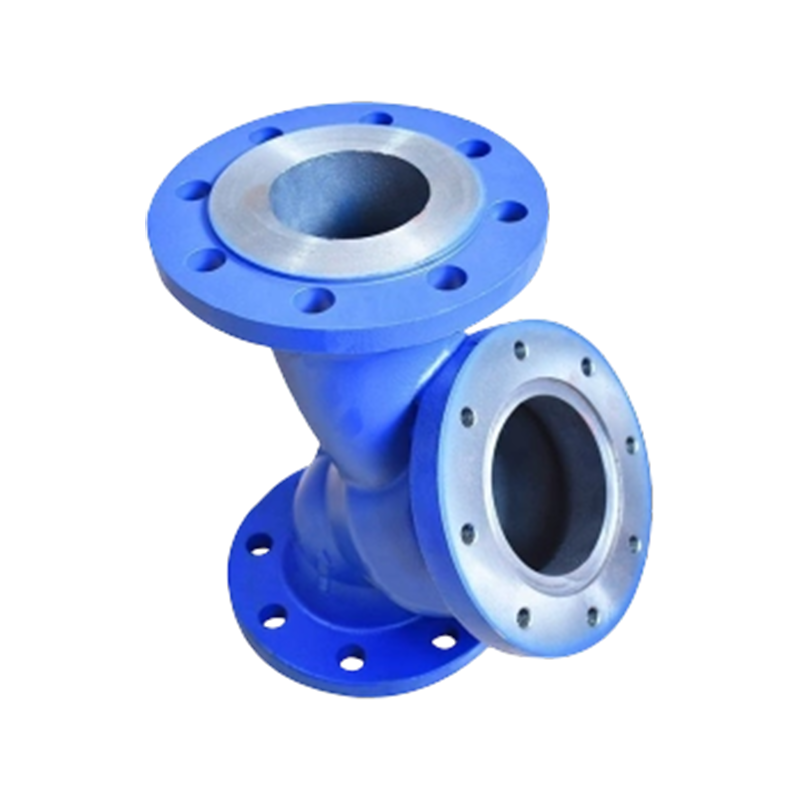
Ductile iron pipe and fittings are the global standard for pressurized water and sewer mains. Compared to PVC or HDPE, ductile iron offers superior beam strength, higher pressure ratings, and excellent resistance to soil loading. Its service life in most soils exceeds 100 years, making it the preferred choice for critical buried infrastructure.
Wind turbine hubs, gearbox housings, crusher components, and large valve bodies are routinely cast in ductile iron. The ability to produce single-piece castings weighing several tons, combined with predictable mechanical properties, enables compact, reliable designs for demanding environments.
The production of ductile iron castings involves tightly controlled sequences. Successful casting requires precise management of nodularizing efficiency, inoculation effectiveness, and cooling uniformity.
Standard Production Workflow
Charge calculation and melting in induction furnaces with precise temperature control.
Controlled addition of Mg-alloy to convert graphite morphology into nodules.
Adding ferrosilicon inoculant to control nodule count and refine graphite size.
Pouring molten iron into prepared molds with optimized gating systems.
Managing cooling gradients and riser placement to eliminate internal shrinkage.
Removing castings from molds and allowing uniform cooling to avoid residual stress.
Cutting off feeders, risers, and flash, followed by rough grinding of parting lines.
Tailoring the matrix structure to achieve specific ductility or strength targets.
CNC machining, surface finishing, and non-destructive testing to verify integrity.
Green sand molding remains the dominant method for medium-to-large production runs due to its efficiency and lower cost, while resin sand molding is preferred for complex geometries or higher dimensional accuracy. Modern foundries employ real-time spectrographic analysis to verify composition before pouring, ensuring every heat meets specified grade requirements.
A significant advantage of choosing ductile iron is the high degree of design freedom it offers. Engineering teams can develop complex, thin-walled, or heavy-section castings with integrated features that would require multiple welded steel assemblies.
Professional foundries provide comprehensive engineering services, beginning with solidification simulation (casting process modeling) to predict shrinkage, porosity, and residual stress. Tooling design incorporates:
To deliver plug-and-play components, integrated service providers offer downstream processing including precision CNC turning and milling, deep-hole drilling, surface grinding, and anti-corrosion coating application. Complete dimensional inspection using coordinate measuring machines ensures compliance with strict geometric tolerances.
Magnesium is the most common nodulizing element, typically added in amounts ranging from 0.03% to 0.06% of the melt weight. Cerium and other rare-earth metals are sometimes used as supplements or alternatives in specific applications.
Yes, in many cases. Ductile iron offers similar or higher yield strength than low-carbon steel while providing better castability and machinability. However, for applications requiring very high impact toughness at sub-zero temperatures or extensive weld fabrication, steel may still be preferred.
Heat treatment is a powerful tool. Annealing produces a ferritic matrix for maximum ductility and toughness. Normalizing yields a pearlitic structure for higher strength. Quenching and tempering produces martensitic or tempered structures, and austempering produces ADI (Austempered Ductile Iron), which has exceptional wear resistance and fatigue strength.
Like all cast metals, ductile iron can experience shrinkage if not properly designed. However, the foundry industry has developed robust feeding and risering strategies that, combined with process simulation, effectively eliminate macro-shrinkage. Proper gating design and adequate melt superheat are critical control factors.
As-cast surface roughness typically ranges from Ra 6.3 to 12.5 micrometers, depending on mold quality. Dimensional tolerances follow standard classes such as ISO 8062 or ASTM A985, with CT7 to CT10 grades achievable in production. Tighter tolerances are obtained through subsequent machining operations.
Request for a call today




 English
 中文简体
中文简体 Español